Showing posts with label Writing. Show all posts

Monday, August 8, 2011

It's Not You, It's Me

In any aspect of life, rejection is hard. But writers? We get all bent out of shape about it. We cry. We flounce about and declare that we will never write again. Why should we? We're talentless losers. We have a letter right here in our hand that tells us so.

Agents will tell you that it's nothing personal. It's not that they don't like us, they just didn't like our query/book.

Well, why don't you just stab us in the heart? End it now. Please. Say what you want about us, but please don't insult our words.

Most writers are sensitive. And not in the way you might expect. We talk a good game about growing thick skin, but when it comes right down to it our work is our soft spot. Our Achilles' heel. The chink in our armor. (Enter more clichés here).

We'd rather you told us we were ugly. That our nose is too large or crooked. That you don't like our hair or that our breath stinks. It's a million times better than hearing that our work is derivative, insipid, or cliched.

Not that a rejection letter will necessarily say these things, but to writers, it's there. Encrypted in the words of a standard form rejection is the message that we suck. Our book sucks. And that we should quit wasting everyone's time.

Now for saying this I may end up in that special section of Writers Hell that's reserved for uber successful commercial writers like Nicholas Sparks or Dan Brown, but I get it. I totally understand the agent selection process. I do the same thing every time I go to my local bookstore, the library, or browse my Nook book store.

Source: http://bookishbethie.blogspot.com/2011_03_01_archive.html
I swim in a sea of books, overwhelmed by the sheer number of them. Some are pretty and catch my eye. Others -- ugly. These are discarded immediately. Others take me a while to reject. I have to read the first few pages and get a feel for the narrator's voice and the main characters.

Now imagine that you can only buy 8-10 new books per year. Are you hyperventilating yet? Yeah, me too.

They have no choice but to be selective. They can't represent every book that comes across their desk. Just as we can't buy every book we see (even though I want to). So they read our query letters like we would read the blurb on the back cover and they decide if the book in their hands is something they could fall in love with. If not, a rejection will follow.

It's nothing personal. It's not like I've ever returned a book to the shelf because I hated the author. Well maybe sometimes, but that's not usually the case.

Okay, so now that I have you thinking like an agent, I have a question for you. If you could only have read 3 of the books you've read this year, which 3 would it be and why?

Can't wait to hear your answers!!!


--

Tuesday, June 21, 2011

Writing, Hoarding & Trolls

An incident occurred recently while I was riding in a car with my brother Joey. I was in the driver's seat and we'd stopped at a toll booth so we could pay to cross a bridge. After paying the fee and continuing down the road, I turned to my brother and asked, "have you ever wondered if the toll booth operators are actually a secret race of trolls?"

These are the kinds of questions that get us into trouble people. Of course he'd never wondered this. Most people don't think like that. It's weird.

But weird is what we do. And something about a story I'd once heard regarding trolls that lived under bridges had prompted me to wonder if, in modern times, they disguised themselves as humans, but were ultimately still controlling our passage -- accepting dollars in lieu of answers to complex riddles.

Photo: images.fanpop.com
"Stop. Who would cross the Bridge of Death must answer me these questions three,
ere the other side he see."


Imagine how strange it must be for normal people to be around us. We are an unusual bunch.

For one, we're hoarders. We collect pens, notebooks, index cards, and Post-it notes like there's going to be an office-supply apocalypse and we may never see another pen / notebook / index card / Post-it note again.


Our Google search history is peppered with queries for things like:
  • A body's rate of decomposition when submerged in water
  • Effects of chloroform
  • 9 ways to kill an elf
And we have a tendency to ask the most insane questions seemingly at random. To us it makes sense. We were pondering the question while you were speaking to us and assuming we were listening.

Whether this type of behavior is a detriment to my personality or not, I'll never know. It's simply who I am. And I imagine that a lot of you have had a similar experience. So today I'd like to invite you all to share a moment when your writer-crazy surfaced. A moment when the people around you weren't sure if you were a genius or if they should have you committed.

---

Thursday, June 16, 2011

Check Out My Guest Post

I did a guest post over at R.A. Evan's blog about women and horror.

Women can write horror, too: Guest post by author Melanie McCullough


I am the child of an avid horror fan so I was raised on it. I watched Cat’s Eye when I was 7, graduated shortly thereafter to It (I still can’t stand clowns, thank you very much Mr. King), and can vividly recall a scene in The Gate when a boy uses a Barbie toe to poke out the eyeball that has grown on his palm (I never looked at Malibu Barbie the same way again).

These are the images that shaped my childhood. So, it came as no surprise to me when horror became one of my writing passions. But google “Top Ten Horror Writers” and these are the names that will appear time and time again — Stephen King, Dean Koontz, H.P. Lovecraft, John Saul, Jack Ketchum, Peter Straub, Clive Barker, Richard Matheson, Edgar Allan Poe, Robert McCammon. Noticing a trend?

Read the rest here.

Wednesday, June 1, 2011

Manuscript Infidelity

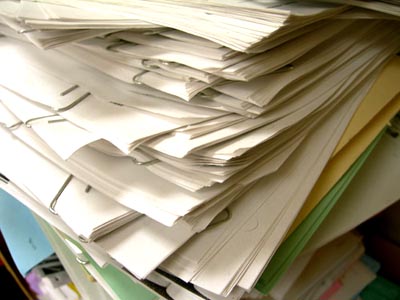
Piles of Typed ManuscriptsI know the drill, finish book 1 and query while working on book 2.

But here's the thing, do you ever get bored with book 2 and start book 3, then outline a plot for book 4, then go back to book 2 because it's fresh and exciting again, then while editing book 2 completely out of the blue start writing a manuscript you have no business writing just because it's fun?

No? Come on now, it can't be just me.

It sometimes makes me feel as if I'm cheating. As if I should be satisfied working on just one project or in one genre at a time. Problem is, I never am. I finished Bloodletting a while ago. It's not my first novel. It certainly won't be my last. But right now it is in the query stage and in between waiting for the rejections and reworking my query to quell future rejections, I have 4 projects (in multiple genres) in the works that I absolutely love. I cannot for a second dream of stopping any one of them to focus solely on one of the others.

This doesn't even include the long list of stories that are in the plotting stage.

I've always been this way. Ever since childhood. Much to the chagrin of my siblings who believed my multitasking ADD behavior was just my way of showing off. It's not, it's just the way I'm wired. I'm not a do one thing kind of gal.


I can't listen to a radio station for more than a minute. I flip through television channels during commercials.

I read multiple books at once. Therefore, I think it's only natural that I would find the need to write just as many.
  
That's not to say that everything I work on will be brilliant and worthy of publication. But, what I write, and the way I write, serves a purpose for me. It keeps me from getting blocked. It keeps the self-doubt at bay. It keeps me from over-thinking a project into oblivion.

And it works for me because I am a creature of my moods. There are some days I don't want to read or write horror. There are some days I can't stand the idea of Science Fiction.

I know that it is imperative that I write each and every day, but where's the law that says I have to work on the same thing every time I write?

--

Monday, May 23, 2011

Writing Kryptonite

As a writer, I've found Twitter to be an invaluable source of information, support, and today it even provided inspiration for this blog post when Georgia McBride sent a tweet reminding us writers to be aware of our weaknesses.

I know I'm not perfect. Far from it. So, I began pondering my weakness, my Writing Kryptonite if you will. The one thing that I do that will destroy my story if left unchecked. It wasn't hard to figure out. In fact, I came upon it almost immediately -- Dialogue.

People find my obession with a great/funny/profound line quite humorous, but I can't help but appreciate a well-written piece of dialogue. I know just how hard it is to craft. Or at least how hard it is for me.

I'm sure there are people out there for whom dialogue is natural, witty, and sparkling on the first try. Me? I have my gems that appear out of nowhere, but for the most part it takes me five or six revisions before I can read my dialogue without wincing at the inane and unbelievable words on the page.

The truth is, I talk funny. At least by modern standards. I grew up dirt poor (with 8 kids in the house, how could it be any other way?) and I think without realizing it, I overcompensated. I didn't want anyone thinking of me as uneducated poor white trash, so I absorbed everything I could. I worked hard to perfect my speech and expand my vocabulary. And unless I'm riled up, you will never even notice an accent.

So, it's safe to say that I don't speak like other people my age. A fact highlighted whenever a reader tells me a normal person would never say a line I've written on the page.

I'm okay with this weakness because I'm aware of it. It's the first thing I point out to my earliest readers when asking for a critique. And when they come back laughing, I understand.

So tell me readers, what's your writing Kryptonite?


-----

Saturday, April 30, 2011

Playing Through the Pain

kerri strug 8.6


I was 15 in the summer of 1996 when the Olympics were held in Atlanta, GA. A lifetime fan of the sporting event, I watched those games religiously. 1) Because they were held in the US and therefore I got to see a lot of the events live. And 2) Because I had always loved the beauty, artistry and strength that combines to form an Olympic gymnast, and in 1996 the American girls were a strong contender for the gold.

I devoured every scrap of information I could gather about these girls who were dubbed The Magnificent 7. Today I can still recite lines from Dominique Moceanu's autobiography. So, by the time the Atlanta games rolled around, I felt as if I knew these girls. Their struggles, their pain, and their ultimate triumph moved me to tears.

For me, there will never be a more powerful or enduring symbol of strength  and courage then the moment Kerri Strug landed her vault on a broken ankle. I could see the pain in her eyes, the tears threatening to fall, but behind it all I saw her determination. It wouldn't have mattered if someone had come along and severed her foot from her leg. She was sticking that landing.

As writers I believe there are a lot of times when we too must play through the pain. I've personally spent most of this week with an aching in my heart. It's broken. Shattered. But still, I write. I have to. I can't afford to squander the few precious moments I have in which to do what I love.

I can't say that it doesn't color my writing somewhat. I'm not the same person I was last week. The girl I was long gone and nearly forgotten. But I've grown. And our lives, our experiences, these are the things that ultimately lead us to our unique voice, so as a writer I've only gotten better.

It may not always be easy to write a love scene when you and your significant other have just finished arguing about which of you forgot to take out the garbage. Nor is it necessarily fun writing a happy ending when you've just buried a loved one. But we know that in order to be successful writers we have to write the story that needs to be told and we have to write every day.

We have no choice but to play through the pain. We must persevere. We must grit our teeth and stick that landing.


Have you ever had to play through the pain? Or can you completely separate your personal experience from the act of writing? What are some of the ways you get through it and continue to write?

----

Friday, April 29, 2011

Prologues

Tonight I want to talk about the dreaded prologue. I generally avoid prologues, but I bring it up because the manuscript I am currently querying has one. And not only is it completely necessary to my story, it is a whopping 2,388 words (or 9 pages) long.

That's right folks, not only am I insistent upon keeping my prologue, it's an epic one to boot.

Almost every agent I've researched (including some of those I plan to query) has at one point or another, given their opinion on prologues, and from what I've gathered most agents absolutely loathe them.

One of my favorite posts came via Vickie Motter from the Andrea Hurst Literary Agency. It stands out amongst the others I've read because Ms. Motter, while admitting that she is occasionally guilty of skipping a prologue in a manuscript, takes the time to explain that not all prologues are unnecessary and/or a bad idea.

There are reasons why prologues exist and Ms. Motter highlights some of the ways in which prologues can be used effectively:


Past is Prologue:
  • If your novel is about someone in the present discovering some link to history (paranormal or not), you might show a scene of a significant event that will be important in the future (present) (The Mummy)
  • You show the murder or crime (without giving away the killer or thief) (Dan Brown)
  • An extremely important event that doesn't quite go with the body (maybe for POV or VOICE reasons) but you must include it
  • The character died and the body is about their afterlife (Heaven, Angel, Vampire, etc)

Future is Prologue:
  • Foreshadowing a death or near death (Twilight)
  • Foreshadowing some horrific experience
  • Reflection upon the events in the story (The Notebook)
  • The character died and the body is about their life

And in order for a prologue to work there are a few things that a writer must do, and an equal number of things that they must avoid:


Do:

  • Have action
  • Have intrigue
  • Have VOICE
  • Leave unanswered questions

Don't:
  • Give too much detail. It isn't a textbook of history or of events in your novel
  • Use it as a back story dumping ground (and/or info dump)
  • Use it as a device to reveal information not found in the body--important information in the first page can easily be forgotten by the reader
  • Include a prologue just because you think it will sell more books


The bottom line is that there must be a reason for your prologue to exist. Unfortunately, a lot of the time writers use the prologue as a venue to perform a little bit of data dump.

They think that they're setting up the story, giving us pertinent information, when in fact the information could have been relayed in a better way. Woven throughout the story instead of simply spewed all over the first few pages of the manuscript.

What are your thoughts on the Prologue?  Does the WIP you're working on now contain one?


--

Thursday, March 24, 2011

First Impressions

There's a lot of talk in the writing world about the opening line. Just like approaching a member of the opposite sex, those first words can apparently make or break you in the eyes of agents, editors, and readers. And they could quite possibly haunt you for the rest of your life.

We're taught in the early stages of writing that we need to hook our readers immediately and make them want more, and that we're supposed to do this in a single, solitary sentence.

There is a plethora of information available on the subject for those who seek it. From writing workshops to internet blogs, it seems everyone has an opinion on how to craft the perfect opening line. Unfortunately, a lot of these sources contradict one another.

Some say scene description at the start will kill your novel. Others say it's crucial to world building.

One says to never open with dialogue. Another says doing so will make your work stand out.

It's enough to drive a writer insane. Or at least make us question why we ever decided to embark upon this potentially soul-crushing adventure in the first place.

Like every writer I struggle with the opening hook, but I've found that if I don't fret, just let it go and write my story, something great will pop into my head before I've typed The End and break out into my victory dance.

Bloodletting starts with Olivia was afraid of the dark. I can only hope I nailed it. I think I did. But Bloodletting is revised and polished. Query letter has been perfected and submitted to agents. Now it's time for me to move forward.

My current obsession begins with She never cut deep enough to finish the job, just enough to create a God-awful mess. I like it now, but who knows, by the time I'm done I probably will have changed it a hundred times.

I'll admit, it's been a good writing week for me. My creativity is flowing. I'm not contending with bouts of "everything I write is crap" melancholia. So, just for fun (and since we don't have to worry about my sinking into an abysmal depression) I'm going to post the first oh-so-important line of some of the novels and short stories I've written.

I'm the first to admit that a lot of these are downright awful, but read them anyway. Then let me know (via the comment button below) which one hooks you and makes you want to see more, and which ones should suffer the wrath of my delete key.

1) I was never one for granting second chances, so when he begged for one - when he swore up, down, back, forth and sideways that it would never happen again - I wasn't too inclined to give him one.

2) If Alyssa had learned one thing today, it was that cleaning a toilet in a mini-skirt and her favorite stilettos was not something she ever wanted to experience again.

3) Back home, I had dreamed of America often.

4) The door at the opposite end of the long, narrow corridor was slightly ajar, which only served to exacerbate his anxiety.

5) The river was just about the only thing moving, it's violent and turbulent routine unabated by the scene growing along its bank.

6) There was a time, centuries ago, when vampires were worshipped as gods.

7) Lexie's eyes grew wider, her eyebrows reaching towards the sky.

8) The corners of the envelope, adorned with silver embossed doves flying beside cascading ribbons, declared it to be a wedding invitation.

9) She was light in his hands.

10) The scent of bacon frying filled the kitchen.

11) From the corner of the room where it had been unceremoniously tossed, the digital clock cast an ominous red glow across the bare walls.

12) "Have you been drinking already?"